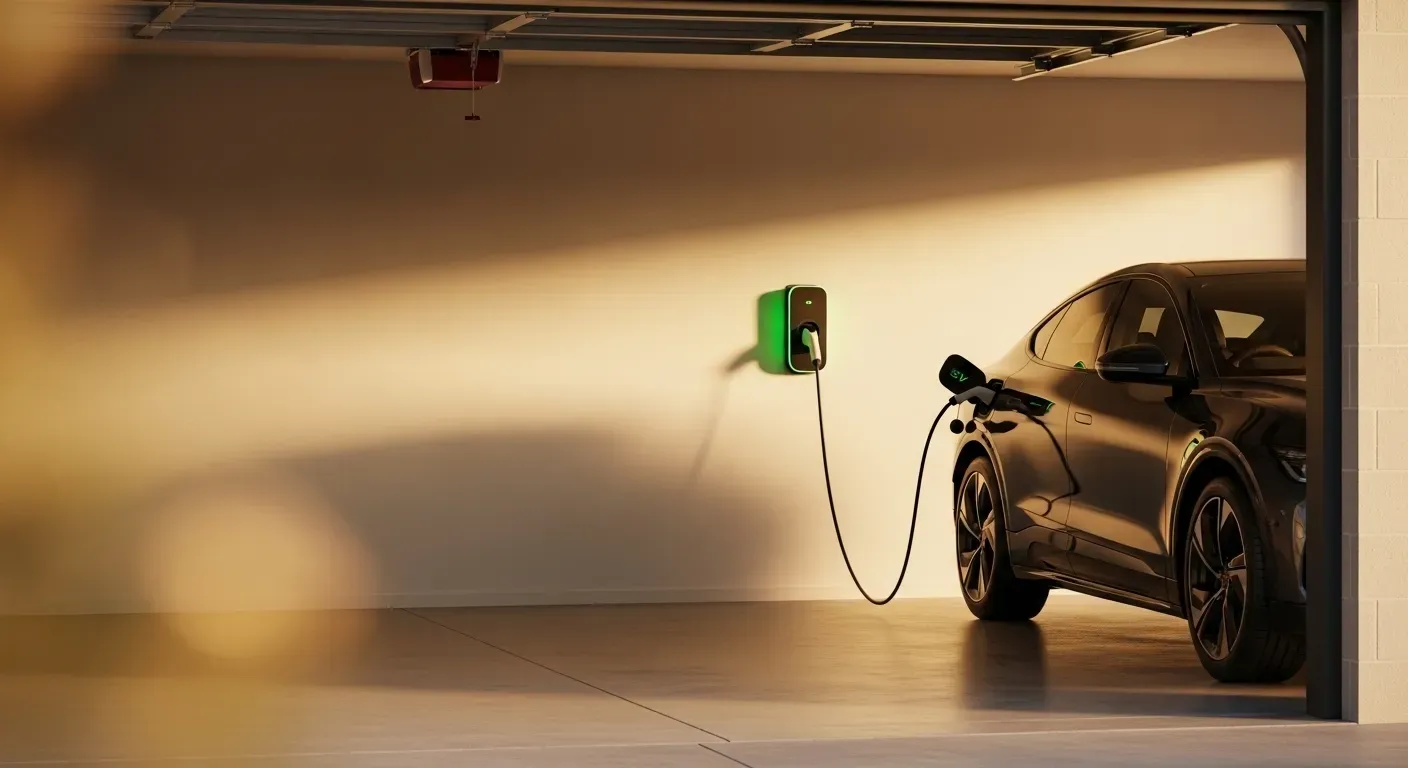
Tesla vs Universal EV Charger Quick Answer Australia
Compare Tesla Wall Connector and universal Type 2 chargers side-by-side
Tesla vs Universal Overview
Tesla Wall Connector ($900-$1,200) is the cheapest quality 7kW unit, premium design, and works with every EV via the Type 2 plug — but lacks solar integration and third-party apps. Universal chargers (Zappi $1,800-$2,500, Evnex $1,200-$1,500, Wallbox $1,400-$1,800) cost more upfront but add solar diversion, OCPP compatibility, smart load balancing and dynamic tariff support. Choose Tesla for price & simplicity; choose universal for flexibility.
Tesla Wall Connector
- •Cost: $900-$1,200 (cheapest)
- •Works with every EV via Type 2
- •Premium design, Tesla app
- •No solar diversion / OCPP
Universal Chargers
- •Evnex: $1,200-$1,500 (NZ made)
- •Wallbox: $1,400-$1,800
- •Zappi: $1,800-$2,500 (solar)
- •OCPP, solar, smart tariffs
Compatibility
- •Type 2 is Australian standard
- •Both work with all new EVs
- •7kW single-phase most common
- •11/22kW needs three-phase supply
Feature Comparison
- •Tesla: simple, cheap, beautiful
- •Zappi: best for solar diversion
- •Wallbox/Evnex: OCPP + apps
- •All offer scheduling / load balance
Which Should You Choose?
Pick Tesla Wall Connector if you own a Tesla (or plan to), want the cheapest reliable 7kW unit, and don't need solar integration. Pick a universal charger (Zappi / Evnex / Wallbox) if you have solar and want true solar diversion, run multiple EVs, want OCPP for future third-party integrations, or need tariff-aware charging. Either way, budget $800-$2,500 for install on top of the charger cost and use a licensed electrician.
On This Page:
Type 2 Connector Standard: Australia's Universal EV Plug
Universal standard for all EVs in Australia
Since 2023, all EVs sold in Australia including Tesla use the Type 2 (IEC 62196) connector standard for AC charging.
- Any Type 2 charger works with any EV (Tesla, Hyundai, BYD, MG, etc.)
- No proprietary connectors or adapters needed
- Full interoperability across all brands
- Future-proof for new EV models
Tesla Wall Connector Gen 3: $900-$1,400 2026 Australia
$900-$1,200
Key Features
- • Charging Speed: Up to 22kW
- • Cable: 7.3m tethered included
- • Connectivity: WiFi, Tesla app
- • Warranty: 4 years (longest)
- • Compatibility: All EVs (Type 2)
- • Weather: IP67 rated
Pros
- ✓ Premium Tesla build quality
- ✓ Longest warranty (4 years)
- ✓ Excellent value for money
- ✓ Seamless Tesla integration
- ✓ Attractive minimalist design
Cons
- ✗ No solar integration
- ✗ Basic scheduling only
- ✗ Tesla app limited for non-Tesla EVs
- ✗ Tethered cable can\'t be replaced
Best For:
- Tesla owners wanting seamless integration
- Design & build quality priority
- Simple reliable charging
- Budget-conscious buyers
Zappi EV Charger: $1,800-$2,500 Best Solar Integration 2026
$1,800-$2,500
Key Features
- Charging Speed: Up to 7.4kW (single-phase) or 22kW (three-phase)
- Cable: 6.5m tethered, optional untethered version
- Solar Integration: Automatic solar diversion with ECO/ECO+ modes
- Connectivity: WiFi, myenergi app (works with all EVs)
- Warranty: 3 years
Pros
- • Best-in-class solar integration with real-time power adjustment
- • ECO mode uses solar priority, ECO+ mode 100% solar only
- • Load balancing prevents overloading home circuit
- • Works with all EV brands equally well
- • Can integrate with myenergi solar products
- • Proven reliability in Australian conditions
Cons
- • Higher price ($1,800-$2,500 vs Tesla $900-$1,200)
- • Requires CT clamp installation for solar monitoring (adds $200-400)
- • More complex setup if you want full solar optimization
Best For:
Wallbox Pulsar Plus: $1,400-$1,800 Best Value Smart Charger 2026
$1,400-$1,800
Key Features
- Charging Speed: Up to 7.4kW (single-phase) or 22kW (three-phase)
- Cable: 7m tethered
- Connectivity: WiFi, Bluetooth, Wallbox app
- Smart Features: Power Boost (dynamic load management), scheduling, RFID access
- Warranty: 3 years
Pros
- • Excellent value for smart features ($1,400-$1,800)
- • Power Boost prevents circuit overload automatically
- • Comprehensive app with energy monitoring and scheduling
- • Compact design (smallest charger on market)
- • Works seamlessly with all EV brands
- • Optional solar integration (not as advanced as Zappi)
Cons
- • Solar integration requires third-party hardware/apps
- • Shorter warranty than Tesla (3 vs 4 years)
- • Some users report app connectivity issues
Best For:
Other Notable EV Chargers 2026 Australia: $1,200-$2,000
Alternative options worth considering
Fronius Wattpilot
$1,600-$2,000
Evnex E2
$1,200-$1,500
NRMA EV Charger
$900-$1,200
Installation Requirements: $800-$2,500 Labour Costs 2026
Electrical specifications and installation complexity
| Charger Model | Power Options | Circuit Breaker Required | Cable Size | Installation Complexity |
|---|---|---|---|---|
| Tesla Wall Connector | Single-phase: 7.4kW Three-phase: 11-22kW | 32A (7.4kW) 50A (11kW+) | 6mm² (7.4kW) 10mm² (11kW+) | Easy - Standard install |
| Zappi | Single-phase: 7.4kW Three-phase: 22kW | 32A (7.4kW) 32A per phase (22kW) | 6mm² (7.4kW) 6mm² per phase (22kW) | Medium - CT clamps needed |
| Wallbox Pulsar Plus | Single-phase: 7.4kW Three-phase: 22kW | 32A (7.4kW) 32A per phase (22kW) | 6mm² (7.4kW) 6mm² per phase (22kW) | Easy - Standard install |
| Fronius Wattpilot | Single-phase: 7.4kW Three-phase: 22kW | 32A (7.4kW) 32A per phase (22kW) | 6mm² (7.4kW) 6mm² per phase (22kW) | Medium - Inverter integration |
Standard Installation (Tesla, Wallbox)
- • Dedicated circuit from switchboard to charger location
- • RCD (Residual Current Device) safety protection
- • Hardwired connection (no plug required)
- • Wall mounting hardware included
- • Compliance certificate provided
- • Typical install time: 2-4 hours
Solar Integration Install (Zappi, Fronius)
- • All standard installation requirements PLUS:
- • CT (Current Transformer) clamps on main switchboard
- • Additional wiring for solar monitoring
- • Configuration for solar inverter communication
- • Solar system assessment and setup
- • Additional cost: $200-$400 for CT clamps and setup
- • Typical install time: 3-5 hours
Important: All chargers require a licensed electrician for installation. DIY installation is illegal in Australia and voids warranties. Expect to pay $800-$2,000 for professional installation depending on distance from switchboard and whether you need switchboard upgrades.
Advanced Features: Smart Charging, Solar & App Control
Load balancing, OCPP, and smart home integration
Load Balancing Capabilities
What is Load Balancing?
Load balancing prevents your home from exceeding its electrical capacity by automatically adjusting EV charging power based on household consumption.
Example: If your home uses 15kW and you have 20kW total capacity, load balancing limits EV charging to 5kW to prevent blackouts.
Which Chargers Support It?
- Zappi: Dynamic load balancing (monitors household power in real-time)
- Wallbox Pulsar Plus: Power Boost feature (prevents circuit overload)
- Fronius Wattpilot: Dynamic power management with Fronius inverters
- Tesla Wall Connector: No dynamic load balancing (static power limit only)
When You Need Load Balancing: Essential if you have limited electrical capacity (older homes, no three-phase), use multiple high-power appliances simultaneously (pool heater, ducted AC, EV charger), or want to avoid expensive switchboard upgrades ($2,000-$5,000).
OCPP Compatibility (Future-Proofing)
What is OCPP?
Open Charge Point Protocol (OCPP) is an open-source standard that allows EV chargers to communicate with any charging management platform, not just the manufacturer\'s app.
Why It Matters: Future-proofs your charger so you can use third-party energy management systems, integrate with virtual power plants (VPPs), and avoid vendor lock-in.
OCPP Support by Charger
- Evnex E2: Full OCPP 1.6J support (best for future-proofing)
- Wallbox Pulsar Plus: OCPP 1.6 capable (may require activation)
- Zappi: Limited OCPP support (myenergi ecosystem only)
- Tesla Wall Connector: No OCPP support (Tesla app only)
- Fronius Wattpilot: No OCPP (Fronius ecosystem only)
Home Energy Management Integration
| Charger | Home Assistant | Google Home | Amazon Alexa | Apple HomeKit |
|---|---|---|---|---|
| Tesla Wall Connector | ✓ (unofficial) | ✗ | ✗ | ✗ |
| Zappi | ✓ (official) | ✓ | ✓ | ✗ |
| Wallbox Pulsar Plus | ✓ (official) | ✓ | ✓ | ✓ |
| Fronius Wattpilot | ✓ (unofficial) | ✗ | ✗ | ✗ |
Winner: Wallbox Pulsar Plus has the best smart home integration across all major platforms.
Long-Term Ownership: 10-15 Year Lifespan & Maintenance
What to expect over 5-10 years of ownership
Maintenance Requirements
Minimal Maintenance (All Chargers)
- • Monthly: Visual inspection for damage
- • Quarterly: Clean charger exterior with damp cloth
- • Annually: Professional electrical safety check ($150-$250)
- • As Needed: Cable inspection for wear/damage
Expected Lifespan: 10-15 years with proper maintenance. Electronics typically last longer than the cable (which may need replacement after 8-10 years of heavy outdoor use).
Software Update Policies
- Tesla Wall Connector:
Automatic OTA updates via WiFi. Tesla has consistently updated older chargers for 5+ years. Strong track record.
- Wallbox Pulsar Plus:
OTA updates via WiFi. Active development with quarterly feature updates. Good track record.
- Zappi:
Manual updates via USB or installer. Less frequent updates but stable. Requires technician for major updates.
- Fronius Wattpilot:
OTA updates via WiFi. Regular updates tied to Fronius solar ecosystem. Active development.
What Happens When Chargers Become Obsolete?
Good News: Chargers Age Well
- • Type 2 connector is standardised (won\'t change for 10+ years)
- • Basic charging function works even if app/cloud services shut down
- • Hardware designed for 10-15 year lifespan
- • Major brands unlikely to abandon cloud services (Tesla, Wallbox)
Worst-Case Scenarios
- • Cloud service shutdown: Lose app control but basic charging still works
- • Company goes bankrupt: No warranty support, but charger continues operating
- • Hardware failure after warranty: Repair costs $300-$600 or replace entire unit
- • Tech advances: Newer chargers may have better features, but yours still works
Future-Proofing Tip: Choose chargers from established brands (Tesla, Wallbox) or those with OCPP support (Evnex) to minimize obsolescence risk. Avoid obscure brands that may not exist in 5-10 years.
Australian Market: Rebates, Standards & Local Support 2026
Availability, local support, and warranty experiences
Stock Availability (2026)
- Tesla Wall Connector: ✓ In Stock
- Zappi: ✓ In Stock
- Wallbox Pulsar: ✓ In Stock
- Fronius: Limited
- Evnex E2: ✓ In Stock
Lead times: 1-2 weeks for in-stock items, 4-8 weeks for backordered models.
Installer Network
- Tesla Wall Connector:
Excellent
Most electricians experienced with Tesla installs - Zappi:
☆ Very Good
Certified installer network, solar specialists - Wallbox:
☆ Very Good
Growing network, good metro coverage - Fronius:
☆☆ Good
Solar installer network, limited EV specialists - Evnex:
☆ Very Good
Australian company, good local support
Warranty Experience
- Tesla:
Excellent
Fast replacement, good communication, Australian support team - Zappi (myenergi):
☆ Very Good
UK-based but responsive, 2-3 week replacement - Wallbox:
☆☆ Good
EU-based support, can be slow (3-4 weeks) - Fronius:
☆ Very Good
Strong solar reputation, good AU presence - Evnex:
Excellent
Australian company, fastest local support
🇦🇺 Australian-Specific Recommendations
Best for Remote/Regional Areas:
Tesla Wall Connector - Simplest to service, most installers familiar, parts readily available Australia-wide.
Best for Australian Customer Support:
Evnex E2 - Australian company based in Auckland, same timezone, local phone support, understands AU regulations.
Best for Solar-Heavy Regions (QLD, WA):
Zappi - Maximizes solar utilization which is critical in states with high solar penetration and feed-in tariff reductions.
Most Future-Proof:
Evnex E2 (OCPP support) or Tesla (proven longevity) - Both unlikely to abandon Australian market.
Decision Framework: Which EV Charger Is Right for You?
Which charger is right for your situation?
Choose Tesla Wall Connector If:
- ✓ You own a Tesla and want seamless app integration
- ✓ You prioritize design, brand, and build quality
- ✓ You want longest warranty (4 years) at competitive price
- ✓ You don\'t have solar panels or advanced optimization needs
- ✓ Budget: $2,500-$3,500 total (charger + install)
Choose Zappi If:
- ✓ You have solar panels or plan to install them
- ✓ You want to maximize free solar EV charging
- ✓ You value environmental sustainability
- ✓ You\'re willing to pay premium for best solar features
- ✓ Budget: $3,500-$5,000 total (charger + install + CT clamps)
Choose Wallbox Pulsar Plus If:
- ✓ You want smart features at value price point
- ✓ You use time-of-use electricity tariffs (need scheduling)
- ✓ You have limited electrical capacity (Power Boost helpful)
- ✓ You want energy monitoring and usage analytics
- ✓ Budget: $3,000-$4,200 total (charger + install)
Choose Basic Charger (NRMA/EVSE) If:
- ✓ Budget is very tight ($2,000-$2,800 total)
- ✓ You have simple, consistent charging needs
- ✓ You don\'t care about app control or optimization
- ✓ You\'re looking for reliable basics without frills
Real-World Scenarios: 4 Australian Case Studies
See which charger suits different situations
Scenario 1: Tesla Owner, No Solar
Best Choice
Tesla Wall Connector
Reasoning
Seamless Tesla app integration, excellent value, long warranty
Total Cost
$2,500-$3,500
Scenario 2: Non-Tesla EV, 6.6kW Solar System
Best Choice
Zappi
Reasoning
Automatic solar optimization saves $300-500/year, payback 2-3 years
Total Cost
$3,800-$5,000
(includes CT clamps)
Scenario 3: Budget-Conscious, Time-of-Use Tariff
Best Choice
Wallbox Pulsar Plus
Reasoning
Smart scheduling saves $150-250/year, affordable smart features
Total Cost
$3,000-$4,000